



A topical Friday to be addressing this subject, as the UK melts in it’s third day of baking heat, there is one word to answer why sustainable nut farming matters; resilience.
When we speak about sustainability, it’s often in vague terms around notions of nature and harmony, and whilst that has its place, we like to anchor claims in verified data. One of the reasons agroforestry has such potential, is that there’s a base of evidence from Canada and France showing key, tangible results which foster a resilience to the harsh realities of a changing climate.
Primary amongst these, at least today, is the ability of alley cropping systems to regulate temperature. The presence of the trees provides the shade which cools the ground temperature, providing much needed cool spots in wood pasture systems for both livestock and the grass on which they feed.
Connected to this, are slightly less obvious benefits; the presence of the trees can warm the ground sooner in spring to aid germination, whilst the shade also reduces rates of water loss, increasing the moisture content of the soil aiding crop growth in the heat of summer.
Interestingly, the tree roots shooting deeper underground taps into phosphorous deposits in the sub soil not usually accessible to annual crops. This is then recycled in the leaf litter in the autumn, which then becomes available in the top soil for the crop the following year. This allows a reduction in fertiliser inputs to maintain the same yields.
Less obvious whilst the flags are cracking, is the ability of tree roots to percolate water into the ground water. This can be a crucial flood prevention measure, especially if we’re expecting more frequent, heavier downpours in the future. When contoured along slopes, the rows are able to act as strips of uncultivated land, percolating water into the ground and reducing sediment run off. Preventing run off can improve river health, and reduces flash flooding.
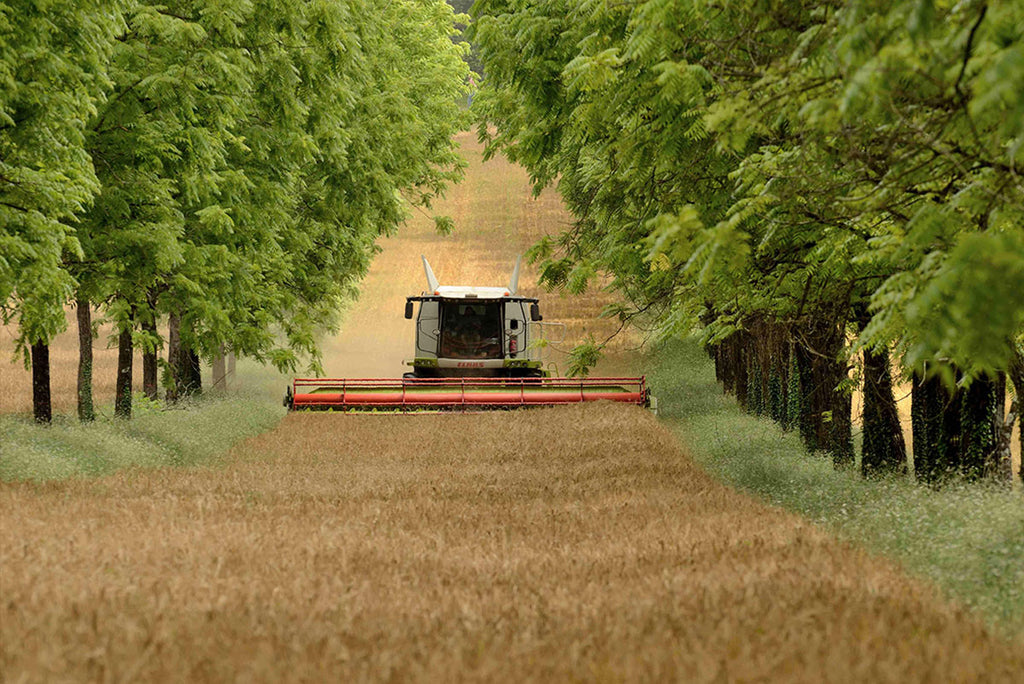
All these benefits combine with the natural beauty of these farms to show a vision for farming which can combine the twin desires for a naturally flourishing landscape and a productive one. It’s a very important element of agroforestry systems that they have been proven to maintain, and in many cases, increase yields and farm profitability. It would be deeply disingenuine if we were to advocate for a farming method that threw away advances in yields developed collectively over the past decades. It’s also essential to stress the compatibility of these methods with existing machinery, to maintain the labour productivity of a farm too. There’s a sweet spot which combines a connected workforce which harnesses machinery, without being brutalised by it.
Agroforestry helps bridge the gap in the popular public imagination between either pristine natural world untouched by human hand, and sacrificial degraded, but productive farmland. There is a different option where we can marry these two wishes!